A luxury safari and a mid-range safari can look nearly identical on a quote sheet. Both include game drives, tented accommodation, and full board. The real gap only becomes clear once you are on the ground and understand where the money actually goes.
This article breaks down the structural differences between the luxury vs mid-range safari tiers: what each delivers, what stays the same regardless of price, and how to decide which suits your particular trip.
Quick Comparison at a Glance
| Factor | Luxury Safari | Mid-Range Safari |
|---|---|---|
| Price Range | $700 to $2,500+ per person per night | $200 to $500 per person per night |
| Camp Type | Exclusive conservancy; low guest numbers | Quality tented camp or lodge; more guests |
| Vehicle | Dedicated private Land Cruiser or Land Rover | Private or shared 4×4 safari vehicle |
| Guide Quality | Senior specialist, often award-level | Licensed, competent professional |
| Exclusivity | Few other guests; private zones | More guests; more vehicles at sightings |
| Night Drives | Available in conservancy | Generally not available in national reserve |
| Walking Safari | Available in conservancy | Limited or unavailable |
| Off-Road Access | Yes, in conservancy | No, national reserve track rules apply |
| Food and Dining | Chef-prepared, tailored menus, private bush meals | Good quality, standard menu, some bush meals |
| Camp Size | 6 to 16 beds total | 20 to 60+ beds |
| Service Ratio | Often 3+ staff per guest | 1 to 2 staff per guest |
What the Luxury vs Mid-Range Safari Price Gap Pays For
The difference between tiers is not primarily about thread count or furniture. The main variables are location, guide experience, and the range of activities available to you. Here is how each breaks down.
Location and Conservation Zone
The most significant structural difference between the two tiers is often not the accommodation itself but where the camp sits.
Luxury safari camps in Kenya are predominantly found in private conservancies: areas adjacent to or surrounding the Masai Mara National Reserve where land is leased directly from Maasai landowners for low-density exclusive safari use. These conservancies, including Olare Motorogi, Naboisho, Mara North, and Ol Kinyei, operate under rules that simply do not apply inside the main reserve.
Inside a private conservancy, each property is allocated a fixed number of guest beds and a defined territory. This hard cap on visitor numbers means the entire experience operates at a lower density. There are fewer vehicles at any sighting, fewer guests sharing communal areas, and none of the predictable vehicle convergence that happens at famous spots inside the national reserve.
Concretely, conservancy camps can offer:
- Night game drives after dark
- Guided walking safaris on foot with armed rangers
- Full off-road access, with no track restrictions
- Significantly lower vehicle numbers per sighting
None of these are available inside the main Masai Mara National Reserve, regardless of how much you spend on accommodation there. They are structural features of the conservancy model, not extras that can be negotiated into a mid-range package.
Mid-range camps sit either inside the reserve or adjacent to it without a dedicated conservancy concession. The wildlife is excellent, but the framework of what is permitted is different.
Guide Depth
Luxury camps recruit from Kenya’s most experienced professional guides. These are typically senior guides with 10 to 25 years in specific ecosystems, advanced wildlife specialist qualifications, and a working knowledge of individual animals by ID. Many have competed in, or won, Kenya professional guide awards. The difference shows most clearly in how a morning game drive is conducted: the behavioral ecology context, the tracking skills, the ability to anticipate rather than react.
Mid-range safaris use licensed, competent professional guides who deliver genuine and rewarding game drive experiences. The baseline is solid. But the ceiling at luxury camps is meaningfully higher.
Vehicle Configuration
Luxury vehicles are typically Land Rover Defenders or high-specification Land Cruisers carrying a maximum of six guests, sometimes as few as four. Every seat is a window seat. Vehicles carry charging ports, camera storage, and often a refrigerator stocked with drinks.
Mid-range vehicles are well-maintained 4x4s but may carry up to eight passengers. Seating arrangements vary, and individual amenities are more limited.
Food and Camp Atmosphere
At luxury camps, fresh ingredients are flown in regularly. Menus are adapted to dietary requirements as a matter of course, not a special request. Private bush breakfasts, sundowner setups in the field, and bush dinners are standard inclusions rather than add-ons. Wines and spirits are typically covered in the all-inclusive rate.
Mid-range camps prepare solid, well-made safari food. Some organize bush meals and sundowners, but these tend to be standard setups rather than fully personalized events.
What Does Not Change Between Tiers
The Wildlife
The most important point to understand before choosing a tier: the wildlife is the same.
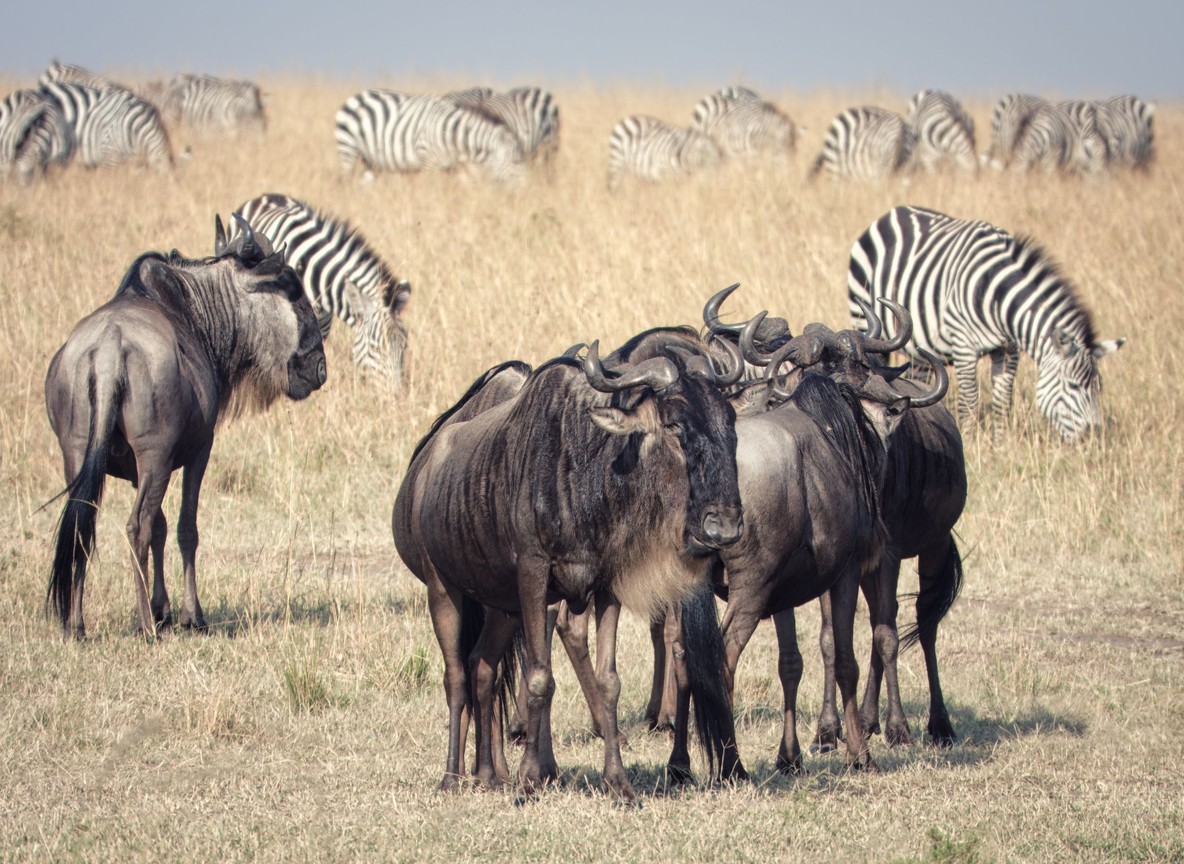
Lions, cheetahs, leopards, and elephants do not appear or behave differently because a guest is staying at a $1,500 per night camp rather than a $300 per night camp. The Masai Mara ecosystem delivers extraordinary wildlife for every visitor who arrives with a competent guide during productive seasons.
What changes with price is the quality of interpretation, the degree of exclusivity, and access to additional activities like night drives and walking safaris. The iconic sightings, a cheetah hunting across the plains, a wildebeest river crossing in full surge, are available at every price point.
The Night Sky
One of the quieter highlights of any Mara safari is the night sky. With no light pollution, the stars over the Mara are exceptional regardless of which camp you are in. This is one of the genuinely egalitarian features of bush travel.
Who Each Tier Suits Best
Luxury Safari Suits You If:
- Night game drives and walking safaris are priorities
- You want very few other vehicles at major sightings
- The trip marks a honeymoon, significant anniversary, or milestone occasion
- You want to work with a senior specialist guide
- You plan to stay 3 to 5 nights and want depth in a single conservancy ecosystem
- Budget is not the constraining factor for this trip
Mid-Range Safari Suits You If:
- You want an excellent Kenya safari at a meaningfully lower cost
- You are allocating budget toward more nights, additional parks, or family travel
- This is your first Kenya safari and you want to experience core wildlife before deciding whether to upgrade on a return visit
- You are traveling with children and prioritize solid game drives, good food, and family-friendly facilities
- You understand that excellent wildlife is available at every price point and want to plan accordingly
Explorer Notes
Conservancy access is not always marketed clearly. When reviewing safari quotes, ask directly whether the camp is inside a private conservancy or inside the national reserve. The answer determines whether night drives and walking safaris are even possible on your itinerary.
The mid-range tier has widened. Several mid-range camps now operate in or adjacent to conservancies with partial access to activities like guided walks. Ask precisely which activities are included rather than assuming the price tier determines the answer.
Short stays favor luxury. If you have only 2 or 3 nights in the Mara, the conservancy access and specialist guiding at a luxury camp make a noticeable difference per game drive. With 7 or more nights split across multiple parks, mid-range accommodation stretches the budget without sacrificing the overall experience.
Green season rates shift the equation. Luxury conservancy camps often reduce rates significantly during the long and short rains (April to June, November). This is one of the clearest windows to access the conservancy experience at prices closer to the mid-range tier.
Which Tier Is Right for Your Trip
The luxury vs mid-range safari decision is a question of priorities, not a question of whether the experience is worth taking.
Both tiers produce real, memorable wildlife experiences in Kenya’s best ecosystems. If conservancy access, specialist guiding, and near-total exclusivity are what you are building a trip around, the luxury tier earns its price in ways that become apparent the moment the game drive starts. If the core goal is a strong wildlife experience across more nights, more parks, or more travelers without concentrating the budget at a single camp, mid-range delivers that without meaningful compromise to the wildlife itself.
The wildlife is always worth the journey. Where you sleep is the variable you can adjust.
Every trip described here can be tailored: dates, budget, camps, and pace built around you.
Get a Personalised Safari